
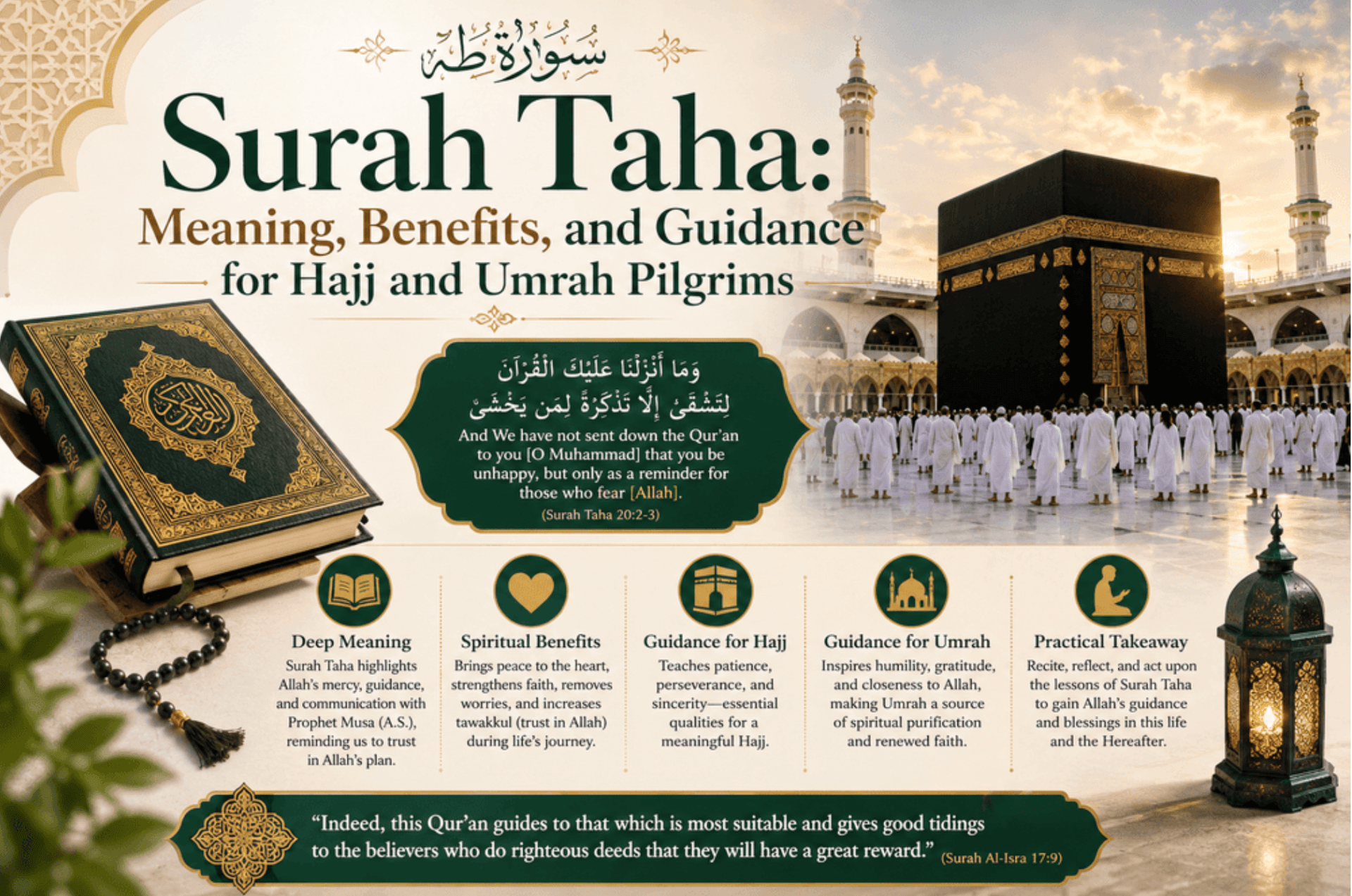
Surah Taha is the 20th chapter of the Holy Quran with 135 verses. Muslims read this Surah for peace and goodness of Allah. The story of Prophet Musa AS in this Surah gives hope and strength during hard times.
For Muslims near Hajj and Umrah, this Surah gives comfort and spiritual peace. Its message helps the heart stay calm and sincere during the holy journey. Many pilgrims read Surah Taha before travel because its words bring patience and trust in Allah.
Surah Taha Meaning and Core Message
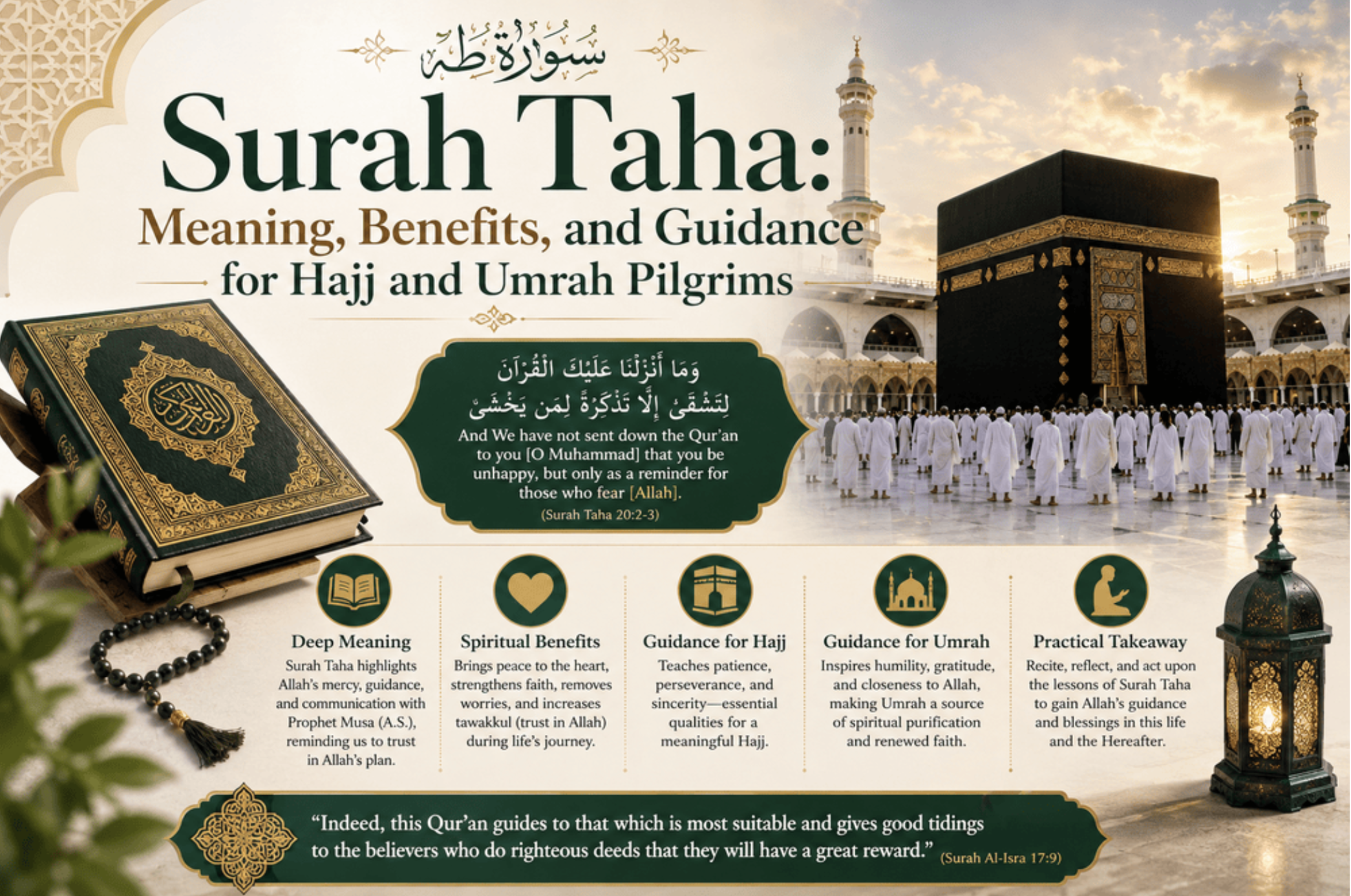
The word “Taha” start with special Arabic letters and only Allah knows their real meaning. Understanding the Surah Taha meaning helps believers reflect on the wisdom, guidance, and spiritual lessons contained in this blessed chapter of the Quran. Many scholars say that this Surah is the source of guidance. Also, this reminds believers that Allah is always close to those who trust Him. It teaches that hard times come in life but Allah gives help and guidance. Pilgrims near Hajj and Umrah feel connected with these lessons because spiritual travel also needs patience and faith.
The main message of Surah Taha includes:
- The Oneness of Allah
- Prophethood
- Accountability in the Hereafter
- Patience during hardship
- Trust in Allah’s guidance
These lessons make the heart strong and peaceful before sacred travel.
Surah Taha Benefits for Muslims
Many Muslims read Surah Taha daily because its message gives comfort and spiritual peace. Islamic scholars explain that the real beauty of this Surah stays in its guidance and wisdom.
The Surah Taha benefits include:
- Strong faith in Allah
- Patience during hard situations
- Reflection on stories of prophets
- Emotional peace through Quran recitation
Benefits of Surah Taha During Hajj and Umrah
Hajj and Umrah need physical and spiritual preparation. During this holy journey many Muslims read Surah Taha because its message matches the purpose of pilgrimage.
Also, the story of Prophet Musa (AS) gives lessons about trust and obedience. Pilgrims also face tiredness and emotional moments during travel. But,the recitation of Surah Taha helps the heart stay calm and focused on worship.
The benefits of Surah Taha recitation include:
- Patience: Pilgrimage includes crowds but, the message of Prophet Musa (AS) teaches patience and trust in Allah.
- Trust on Allah: Pilgrims leave daily comfort behind and depend on Allah during the sacred journey. This lesson creates spiritual peace and sincerity.
- Focus on Worship: This reminds about prayer and remembrance of Allah. Also, pilgrims stay spiritually attentive during pilgrimage.
Surah Taha Tafsir and Lessons for Pilgrims
The tafsir gives many important lessons for Muslims including wisdom and guidance. Pilgrims near Hajj and Umrah often reflect on these verses before travel.
The story of Prophet Musa AS gives courage and hope during fear and uncertainty. Muslims also learn that prayer and trust in Allah bring ease during difficult moments. These teachings help pilgrims stay spiritually prepared.
Important lessons from Surah Taha include:
- Dua for Ease: “My Lord expand my breast” gives a lesson about asking Allah for ease and confidence during challenges.
- Importance of Salah: The Surah reminds Muslims that prayer keeps the heart connected with Allah during every situation.
- Avoid Distraction: Pilgrims get reminders about focus and sincerity during worship and pilgrimage.
Surah Taha for Hajj and Umrah Spiritual Preparation
Before Hajj and Umrah many Muslims read Surah Taha for spiritual peace. This Surah keeps the heart humble and connected with Allah before sacred travel. It also reminds believers about repentance and sincerity.
Sometimes pilgrims include Surah Taha in their daily worship routine before travel. Its message creates emotional strength and inner calm during preparation days. Muslims also feel more spiritually aware after regular Quran recitation.
Surah Taha for Hajj and Umrah preparation supports:
- Emotional strength
- Sincere repentance
- Connection with Allah
- Lessons of patience from prophets
These teachings make spiritual preparation more meaningful and peaceful.
Surah Taha Virtues in Daily Life
The virtues of Surah Taha stay important even after Hajj and Umrah. Muslims continue learning patience and humility through its message. The Surah also reminds believers that Allah always stays near during hardship.
Its teachings help Muslims remain calm during pressure and fear. Daily Quran recitation creates peace and stronger faith in Allah. This spiritual connection improves both worship and daily life.
The Surah teaches:
- Steadfastness
- Humility
- Faith during pressure
- Reflection on Allah’s mercy
These lessons help Muslims become better believers every day.
Conclusion
Surah Taha gives guidance peace and spiritual comfort for Muslims near Hajj and Umrah. Its message teaches sincerity and complete trust in Allah. Pilgrims feel emotionally connected with Allah after reading this Surah before sacred travel.
The lessons of Prophet Musa AS also remind believers that every hardship comes with Allah’s help and mercy. Many Muslims include this Surah in their Umrah Guide because it creates spiritual readiness and inner calm.
Its teachings also help believers stay focused during travel and worship. This becomes very meaningful during preparation for umrah packages because spiritual peace and sincerity make the sacred journey more beautiful and memorable.
FAQs
What is the main meaning of Surah Taha?
Surah Taha gives lessons about the Oneness of Allah faith and trust during difficult moments. The story of Prophet Musa AS teaches patience and sincerity. Muslims feel spiritually stronger after reading its message carefully.
Does Surah Taha have specific virtues mentioned in Islam?
Islamic scholars explain that the true virtue of Surah Taha stays in its guidance and wisdom. Its message teaches sincerity and perseverance during life challenges. Muslims receive spiritual comfort through understanding its lessons.
Can Surah Taha be included in Hajj and Umrah preparation?
Yes many Muslims include Surah Taha during spiritual preparation before pilgrimage. Its message encourages repentance and emotional strength before travel. This preparation helps pilgrims stay sincere and focused during worship.