📋 Key Takeaways
- Short 25–30 minute sessions prevent mental fatigue and preserve a child's love for the Holy Quran.
- Interactive gamification (digital badges, recitation stars) increases retention by up to 60%.
- Pairing letter phonics with Quranic prophet stories creates emotional connection, not mechanical memorization.
- Consistent spaced repetition (3 to 4 days weekly) beats one lengthy weekend marathon.
- 1-on-1 Al-Azhar certified tutors correct Makharij articulation gently before bad habits solidify.
Quick answer: To teach Quran to kids online successfully, use micro-lessons of 25 to 30 minutes, integrate interactive digital whiteboards, apply positive reward milestones, and partner with a patient Al-Azhar certified tutor who makes recitation fun.
The Challenge of Teaching Quran in the Digital Age
Every Muslim parent dreams of hearing their son or daughter recite the Holy Quran with melody, respect, and precision. Yet between full school schedules, sports, and modern digital distractions, traditional mosque commutes often end in tears and exhaustion.
Understanding how to teach Quran to kids online allows families to replace chaotic evening traffic with relaxed, focused home learning. With the right pedagogical framework, your child will not merely endure lessons—they will eagerly anticipate them.
Why Traditional Rote Memorization Fails Young Minds
For generations, traditional madrasahs relied on repetitive chanting and strict discipline. While well-intentioned, this method frequently leads modern children to view Quran learning as a chore rather than an inspiring spiritual journey.
Children learn through color, audio feedback, curiosity, and positive affirmation. When online teachers apply modern early-childhood pedagogy, letter recognition and Tajweed rules turn into exciting puzzle milestones that build lasting self-confidence.
The 7-Step Method to Teach Quran to Kids Online
1. Keep Sessions Between 25 and 30 Minutes
A child's average attention span corresponds to roughly 3 to 5 minutes per year of age. Expecting a 7-year-old to concentrate through an hour-long lecture produces frustration and fidgeting.
Daily or thrice-weekly 30-minute micro-lessons maximize neuroplasticity. Your child finishes the lesson energized and eager for the next session rather than completely mentally drained.
2. Gamify the Noorani Qaida Phonics
Turn Arabic letter shapes into interactive discovery quests. Use digital flashcards, color-coded Makharij maps, and interactive games where identifying letters releases audio cheers.
When children understand that the letter Baa has a treasure boat with one dot underneath, memorization happens naturally through visual imagery rather than forced memorization.
3. Weave Prophet Stories into Daily Verses
Never separate Quran recitation from emotional understanding. When practicing Surah Al-Fil, share the thrilling story of the elephant army and the birds carrying pebbles.
Children memorize twice as fast when they understand the heroism, mercy, and divine protection embedded within the holy verses they are reciting.
4. Establish a Dedicated Sacred Study Corner
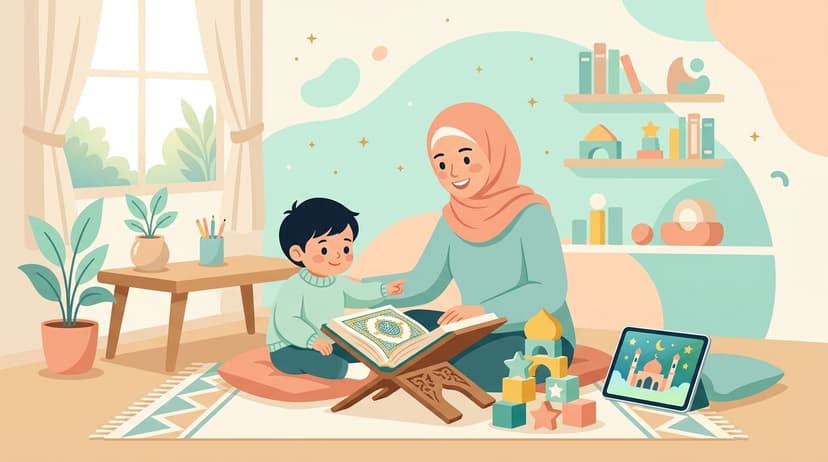
Do not let your child take lessons sprawled on a sofa or in noisy family rooms. Set up a quiet desk with good lighting, a comfortable chair, and their personal Mushaf stand.
Encourage them to perform Wudu before each class and spray mild Oud or rose water. These sensory anchors signal to their developing brain that Quran time is uniquely honorable.
5. Implement Visual Progress Trackers
Hang a colorful printed Quran tracking chart on their bedroom wall. Every time they master a page of Noorani Qaida or complete a short Surah, let them place a gold star sticker.
Tangible visual progress feeds healthy dopamine loops. Children love showing their grandparents and siblings how many stars they have earned this month.
6. Utilize Audio Shadowing with Expert Qaris
During sessions, let your child listen to melodious recitations by master Qaris like Sheikh Al-Minshawi or Sheikh Al-Husary for children. Have them repeat verse by verse in rhythm.
Audio shadowing trains the vocal chords and ear simultaneously, naturally building melodic Tartil cadence and effortless breath control.
7. Celebrate Milestones with Meaningful Islamic Rewards
When your child finishes Juz Amma or masters their first set of Tajweed rules, celebrate as a family. Host a mini celebratory dinner or give a thoughtful gift.
Associating Islamic accomplishments with parental pride and joyful family memories embeds deep religious love that protects their identity through teenage years.
Traditional Madrasah vs. Interactive Online Quran Classes
| Feature | Traditional Weekend Madrasah | Quran In Depth 1-on-1 Online |
|---|---|---|
| Student-Teacher Ratio | 1 teacher to 20–30 students | 1-on-1 Dedicated Private Tutor |
| Attention & Focus | 2–3 minutes direct recitation per child | 100% active speaking & correction |
| Commute & Logistics | 45–60 mins stressful traffic each way | Zero commute; study from safe living room |
| Tutor Accreditation | Volunteers with varying qualifications | Certified Al-Azhar scholars with Ijazah |
| Parent Progress Reports | Infrequent or verbal only | Weekly digital portals & audio recordings |
Frequently Asked Questions (PAA)
What is the best way to teach Quran to kids online without losing their focus?
Keep sessions strictly between 25 and 30 minutes, incorporate interactive visual slides, use gamified digital stars and sticker charts, and weave Quranic stories into letter pronunciation practice to maintain high curiosity and focus.
What is the best age for children to start online Quran lessons?
Children as young as 4 to 5 years old can start with Noorani Qaida phonics and oral Surah repetition. Formal 1-on-1 reading classes with interactive screens typically flourish best between ages 6 and 8.
How many times a week should kids attend online Quran classes?
Three to four 30-minute sessions per week are optimal. This frequency maintains the spaced repetition needed to master Arabic sounds without overburdening school schedules or causing cognitive fatigue.
Can children learn accurate Tajweed through a screen?
Yes, live 1-on-1 video lessons allow teachers to observe mouth articulation (Makharij) in real time. Digital visual diagrams, audio shadowing, and instant feedback produce pronunciation results equal to or exceeding mosque madrasahs.
What equipment is needed for kids online Quran classes?
All that is needed is a tablet, laptop, or desktop computer, a stable internet connection of at least 5 Mbps, a child-friendly headset with a noise-canceling microphone, and a quiet, well-lit study corner.
Inspire Your Child's Lifelong Love for the Quran
Give your child personalized 1-on-1 attention from patient, certified Al-Azhar Quran instructors. Experience the difference with our zero-obligation free trial.
Book Your Child's Free Trial Lesson →