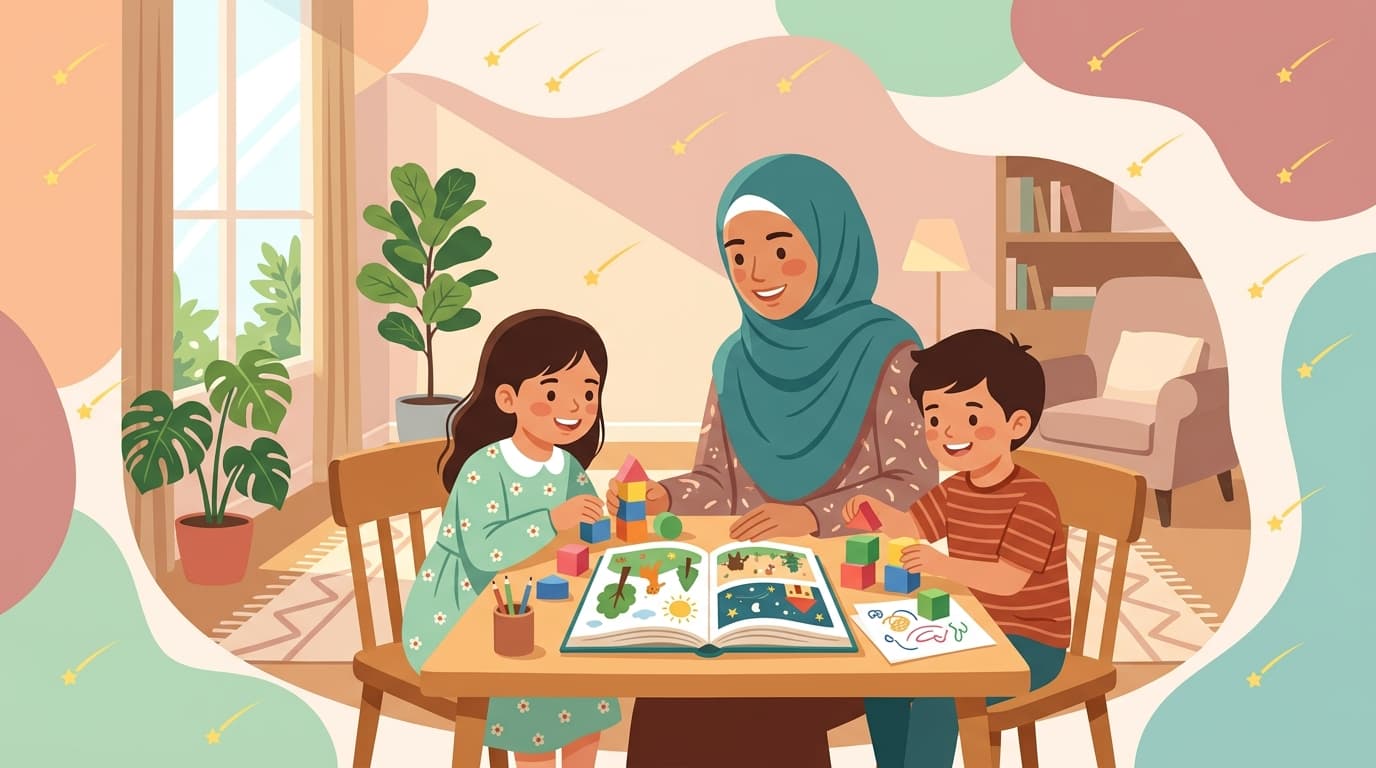
Discovering how to teach kids Arabic at home can feel daunting for diaspora parents living in the US, UK, Canada, or Australia. Between busy school schedules and non-Arabic home environments, building language fluency requires consistent, playful methods rather than rigid drills.
If you ask voice assistants "How do I teach my child Arabic at home?", the proven answer is: Introduce multi-sensory letter games for 15 to 20 minutes daily, label household items with Arabic phonics cards, and connect early vocabulary to Quranic recitation and daily Adhkar.
At Quran In Depth, our native Egyptian educators have helped thousands of bilingual families establish cheerful Arabic learning environments at home. Here is our step-by-step framework to help your child read, speak, and love the Arabic language.
Why Teaching Arabic at Home Strengthens Faith and Identity
For Muslim children growing up in Western communities, Arabic is far more than a secondary language. It is the direct bridge to understanding the Holy Quran during Salah, grasping Prophetic Hadiths, and establishing a grounded Islamic identity.
Research in developmental linguistics confirms that children exposed to dual-language environments before age 8 develop superior cognitive flexibility and sharper phonemic awareness. Teaching Arabic early trains their vocal tract to pronounce complex Arabic phonemes like ‘Ayn (ع), Haa (ح), and Dhad (ض) effortlessly.
Step-by-Step System: How to Teach Kids Arabic at Home
To prevent burnout, structure your child's home Arabic learning around four progressive phases tailored to their developmental age:
- Phase 1: Phonics and Letter Recognition (Ages 3–5): Start with tactile alphabet wooden blocks, sand tracing, and cheerful nasheed songs. Focus on isolated letter sounds (Fathah) before introducing complex shapes.
- Phase 2: Letter Forms and Connecting Rules (Ages 5–7): Teach children that Arabic letters change shapes based on their position (initial, medial, and final). Use color-coded flashcards to show how letters join hands.
- Phase 3: High-Frequency Vocabulary and Household Labeling (Ages 6–9): Stick colorful sticky notes on common household items (e.g., Bab (باب) for door, Kitab (كتاب) for book, Ma' (ماء) for water). Reinforce 3 new words every week.
- Phase 4: Guided Reading and Conversational Immersion (Ages 8+): Introduce leveled Arabic storybooks, short Quranic Surahs from Juz Amma, and interactive 1-on-1 speaking sessions with native educators.
Comparison: Home DIY Learning vs. Structured 1-on-1 Online Mentorship
While home practice provides daily reinforcement, partnering with certified Al-Azhar language specialists accelerates pronunciation accuracy and eliminates parental frustration:
| Feature / Aspect | Parent DIY at Home | Quran In Depth 1-on-1 Classes |
|---|---|---|
| Pronunciation & Makharij | Difficult if parents are non-native | Native Al-Azhar linguists correct live |
| Weekly Consistency | Often derailed by chores and work | Scheduled weekly classes with progress tracking |
| Child Engagement | Resistance to parent instruction | Gamified digital whiteboard, awards & stickers |
| Affordability | Free, but requires expensive workbooks | From $8.50/hour with free trial lesson |
Top 5 Interactive Games to Keep Kids Excited About Arabic
- Arabic Alphabet Treasure Hunt: Hide wooden letter cards around the living room and challenge your child to find the letter making the sound "Baa" or "Jeem".
- Playdough Letter Sculpting: Have your toddler mold the letters with colorful playdough, placing real dried chickpeas on the letters for their dots (Nuqat).
- Digital Whiteboard Drawing: During 1-on-1 lessons at Online Arabic Classes for Kids, tutors use fun digital tracing games.
- The "Simon Says" (Qala Al-Muallim) Game: Practice action verbs in Arabic like Iqlis (sit), Qif (stand), and Ibtasim (smile).
- Bedtime Arabic Bedtime Stories: Read bilingual prophet stories or moral tales to foster positive emotional connections with the language.
Frequently Asked Questions (People Also Ask)
What is the best age to start teaching kids Arabic at home?
The ideal age to begin gentle Arabic exposure at home is between 3 and 5 years old. At this stage, young children absorb sounds and letters through visual games, nursery rhymes, and phonics without feeling pressured.
How to teach kids Arabic at home if parents do not speak Arabic?
Non-Arabic speaking parents can utilize phonics apps, audio flashcards, and enroll in 1-on-1 online classes with certified native teachers. Focus on providing routine and encouragement at home while letting certified educators handle pronunciation.
Should I teach Classical Fusha or Spoken Dialects first?
Always begin with Modern Standard Arabic (Fusha). Fusha is the universal language of the Holy Quran, Islamic literature, and international news, providing children with a rock-solid foundation from which any regional dialect is easily understood.
How much time should we spend practicing Arabic daily?
Keep home practice sessions short and frequent. 15 to 20 minutes of playful daily practice produces far greater retention and enthusiasm than a single overwhelming two-hour weekend session.
Can learning Arabic online work effectively for young children?
Yes. 1-on-1 online lessons tailored for kids utilize gamified activities, digital rewards, and native teachers who give 100% undivided attention, making online learning faster and more personalized than traditional group weekend classes.
Start Your Child's Arabic Journey Today
Experience our fun, kid-friendly 1-on-1 Arabic classes with native Al-Azhar instructors. No credit card required.