If you have recently embraced Islam, you are beginning a relationship with the Quran at a uniquely significant moment — and possibly a uniquely daunting one. The Arabic script, the unfamiliar sounds, the tradition spanning fourteen centuries, the apparent expectation that you should immediately know things that Muslim-born believers have been learning since childhood — these can make the beginning feel overwhelming rather than joyful. This guide reorients the starting point: the Quran is a book that invites you in gently, and your beginning does not have to match anyone else's timeline or starting point.
This Quickstart guide for new Muslims is designed to be completed across your first three months of Quran engagement — not comprehensively, but gently and sustainably, building a foundation that will serve you across years of deepening relationship with the Book.
The right starting attitude: compassion and consistency over completeness
The most common mistake new Muslims make with the Quran is trying to do too much at once — learning Arabic, memorising surahs, studying Tajweed, reading tafseer, and attending group classes simultaneously. This produces overwhelm within weeks and often a complete pause in engagement until "things settle down" — which they rarely do quickly enough.
The Islamic tradition itself models a gradual approach. The Quran was revealed over 23 years — not given all at once. The companions who learned it did so progressively, with the Prophet (peace be upon him) as their guide, proceeding slowly and with depth. "Take from deeds what you are able" is the prophetic principle — and it applies directly to how a new Muslim begins with the Quran.
For the first three months, your single goal is to establish a consistent, positive daily relationship with the Quran — even if that relationship is only 10 minutes per day of Arabic letter practice or listening to verified recitation. Consistency over three months produces a foundation; the same effort dispersed across multiple simultaneous fronts produces nothing sustainable.
Month 1: Letters and sounds — the Noorani Qaida foundation
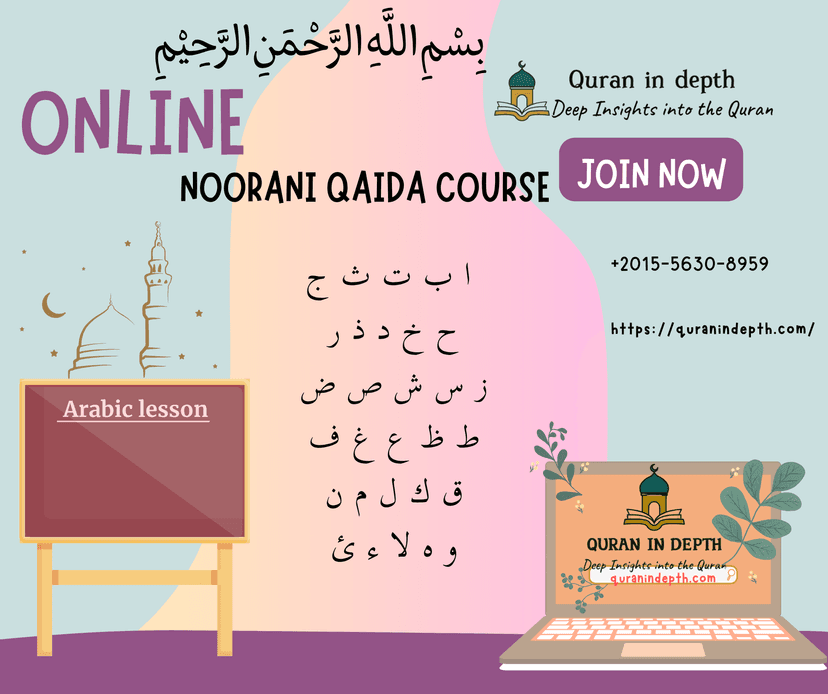
Arabic reading cannot begin at the Quran itself — it begins with the Arabic alphabet. The Noorani Qaida (QA-ee-dah) is the universally used Arabic reading primer that takes learners from zero knowledge to Quranic text reading readiness in approximately 3–6 months of consistent daily practice.
What the Noorani Qaida covers
The 17 lessons of the Noorani Qaida teach:
- All 29 Arabic letters in their isolated forms — how each looks and how each sounds.
- The three connected positions of each letter (beginning, middle, end of a word) — since Arabic letters change shape when connected.
- Short vowel marks (harakat) — the system of small marks above and below letters that determine what vowel sound each letter carries.
- Long vowels and the madd system — the extended vowel sounds that are particularly important for correct Quran recitation.
- Basic joining patterns and multi-syllable words leading up to simple Quranic text.
Month 1 daily practice
Aim for 20 minutes per day, six days per week:
- 10 minutes: Noorani Qaida practice — the current lesson, using a verified PDF and companion audio from a qualified teacher recording. Follow the audio teacher, then close the audio and attempt the lesson independently.
- 5 minutes: Listen to a verified recitation of Al-Fatiha and the three protection surahs (Al-Ikhlas, Al-Falaq, An-Nas) — Sheikh Husary's teaching recitation on Quran.com. Follow along with the Arabic text visible. You are not memorising yet — you are building sound familiarity with the most essential Quranic text.
- 5 minutes: Read the English translation of Al-Fatiha and reflect on it. This is the surah you will recite in every prayer for the rest of your life — knowing its meaning deeply transforms the experience of prayer significantly. Return to it multiple times across the first month.
The parallel track: meaning before full reading
A new Muslim does not need to wait until they can read Arabic to engage with the Quran's meaning. Read the English translation of Juz Amma (the 30th and final chapter of the Quran — the short surahs) during Month 1. This is the section most commonly memorised by Muslim children and the one most frequently recited in daily prayer. Reading it in English creates meaning-familiarity before Arabic reading readiness arrives, making the later experience of reading in Arabic far richer.
Month 2: Al-Fatiha and short surahs from memory
By Month 2, two things should be happening: continued Noorani Qaida practice (targeting Lessons 5–10) and beginning to memorise the essential prayer surahs.
The essential memorisation sequence for new Muslims
These surahs, in this order, are the most practically important for prayer:
- Surah Al-Fatiha (7 verses): Recited in every raka'ah of every prayer. This is the first and most essential memorisation. Do not move to any other surah until Al-Fatiha is memorised correctly and has been verified by a teacher.
- Surah Al-Ikhlas (4 verses): The second most frequently recited surah in prayer. Theologically, it describes the absolute oneness of Allah — "Say: He is Allah, One" — and is one of the deepest statements about Islamic theology in the fewest words.
- Surah Al-Falaq (5 verses): A brief, powerful prayer for divine protection from harm.
- Surah An-Nas (6 verses): A prayer for protection from the whispers of Shaytan. Al-Falaq and An-Nas are traditionally called "Al-Mu'awwidhatain" — the two seeking-refuge surahs — and are almost always memorised and used together.
- Surah Al-Kawthar (3 verses): The shortest surah in the Quran, appropriate as a standing surah in prayer while longer memorisations are being developed.
Month 2 daily memorisation practice: 15 minutes per day in addition to the Noorani Qaida practice.
Method: Listen to the Husary teaching recitation of the surah 3 times, sentence by sentence. Then close the audio and recite the first sentence from memory 10 times. Add the second sentence, recite both 10 times. Continue adding until you can recite the full surah without the audio. Verify with a teacher at least once before considering it "memorised."
Month 3: Beginner class and the first teacher relationship
By Month 3, you have sufficient foundation to benefit maximally from formal teacher-guided learning. Solo self-study in Months 1 and 2 builds familiarity and motivation; teacher guidance from Month 3 provides the correction and structured progression that self-study cannot.
What to look for in a class for new Muslim beginners
- A teacher who is experienced with adult beginners, specifically: Teaching a new Muslim adult Arabic reading requires different skills than teaching a Muslim-born child who has cultural context, community, and family reinforcement. Ask explicitly whether the teacher has experience with non-heritage adult learners.
- A non-judgmental, patient, and welcoming environment: The emotional safety of the learning environment is particularly important for new Muslims who may feel self-conscious about asking basic questions or making beginner errors in front of more established learners. A good teacher for new Muslims makes questions welcome and mistakes unstigmatised.
- An orientation session: Before formal classes begin, a brief orientation — "here is how we approach Quran learning, here is what you will study first, here are the questions you can always ask" — significantly reduces anxiety and improves the early learning experience.
Common questions new Muslims have about the Quran
Do I need to read Quran in Arabic, or is the English translation sufficient?
Both have value and neither replaces the other. Reading the English translation is essential for understanding the Quran's meaning and deepening your relationship with its guidance. For prayer (salah), the Arabic recitation is the required form — no prayer is valid with English recitation alone in the mainstream scholarly position. Learning to read and recite in Arabic is therefore a practical religious requirement, but it is a journey that takes time — time in which the English translation continues to be your primary meaning resource.
Is there a "correct" speed to start with?
No — and be deeply wary of any advice that implies urgency or shaming about your pace. Muslim-born peers around you may have been learning Quran since age 4–5; you are beginning as an adult. The comparison is meaningless. Your three-month milestone at Month 3 — able to read the Noorani Qaida's first 10 lessons, Al-Fatiha and four short surahs memorised, the Quran's meaning increasingly familiar from translation reading — is a meaningful foundation that many Muslim-born adults have not built deliberately even after decades of community membership. It is a genuine achievement worth honouring.
Should I worry about making mistakes when reciting?
The Prophet (peace be upon him) said: "The one who recites the Quran skillfully will be with the honourable righteous scribes, and the one who recites it with difficulty, faltering in it, will have two rewards." (Bukhari and Muslim). Two rewards for the one who finds it difficult. Your mistakes while sincerely learning are honoured in the tradition — not just tolerated. Learn with a teacher so the errors become fewer over time; never let the fear of making them prevent you from reciting at all.
Begin your journey with us: book a free trial lesson — we offer a welcoming orientation for new Muslim learners and will assess exactly where to begin and how to progress at a pace that is sustainable and spiritually enriching for you.