
The tradition of female Quran scholarship is ancient, distinguished, and globally significant — from Aisha bint Abi Bakr (ra), the greatest single transmitter of prophetic knowledge, to the female Quran reciters and scholars who have preserved and transmitted the Quranic sciences across Muslim history. In 2025, female Quran teachers are more accessible than at any previous point — through online learning, Muslim women worldwide now have access to qualified female teachers with Ijazah credentials, specialist teaching experience, and the specific context-awareness that female teachers bring to teaching Muslim women and girls.
This article explores the specific benefits of learning Quran with a female teacher — for women, for girls, and in some family contexts, for families — and addresses the practical and privacy considerations that make female teacher choice a meaningful and worthwhile preference.
The historical tradition of female Quran scholarship
Before the practical benefits, the tradition provides context. Female scholars in Islamic history held senior transmission roles — Aisha (ra) transmitted approximately 2,210 hadiths and was a primary source of both Quran recitation verification and fiqh. Fatimah bint Musa al-Andalusiyya (d. 1094 CE) was described as "the one who completed the teaching of the Quran" for her students in Al-Andalus. Fatimah al-Fihri, founder of the world's oldest continuously operating university (Al-Qarawiyyin, founded 859 CE), created an institution specifically for Islamic learning.
In contemporary scholarship: female Quran recitors with Ijazah chains traceable to these traditions teach in universities, Islamic institutes, and private instruction across Egypt, Saudi Arabia, Malaysia, Morocco, and diaspora communities worldwide. The premise of female Quran scholarship is not a modern accommodation — it is as old as the Quranic tradition itself.
Benefit 1: Comfort and privacy for sisters
For many Muslim women, particularly those observing strict hijab, studying with a male teacher in a video-enabled online session raises issues of privacy and comfort that have real practical impact on the learning experience. These are not trivial concerns — they affect the student's ability to be fully present in the session, comfortable asking questions, willing to make mistakes and attempt corrections, and genuinely engaged in the teacher-student relationship that produces good learning outcomes.
The specific aspects of privacy that female teacher sessions resolve:
- Camera use: Many sisters prefer not to be visible on camera in sessions with male teachers — whether for hijab compliance, personal comfort preference, or household privacy. With a female teacher, camera use can be the student's fully free choice without any modesty consideration. The ability to be visible adds significant pedagogical value — teachers learn from watching students' mouth positions, which is genuinely useful in Tajweed instruction.
- Voice without reservation: Some sisters report unconscious vocal restraint during sessions with male teachers that is absent with female teachers — they speak more naturally, correct themselves more freely, and recite at full volume without self-consciousness. This voice freedom produces better recitation output in sessions and reduces the inhibition effect that subtly limits progress.
- Home environment comfort: Online sessions conducted from home create an environment where a female teacher removes the consideration of having an unrelated male present in the home space, even virtually. This is a consideration that varies in its importance across families and cultural backgrounds but is a real wellbeing factor for those for whom it applies.
Benefit 2: Mentorship and role modelling for girls and young women
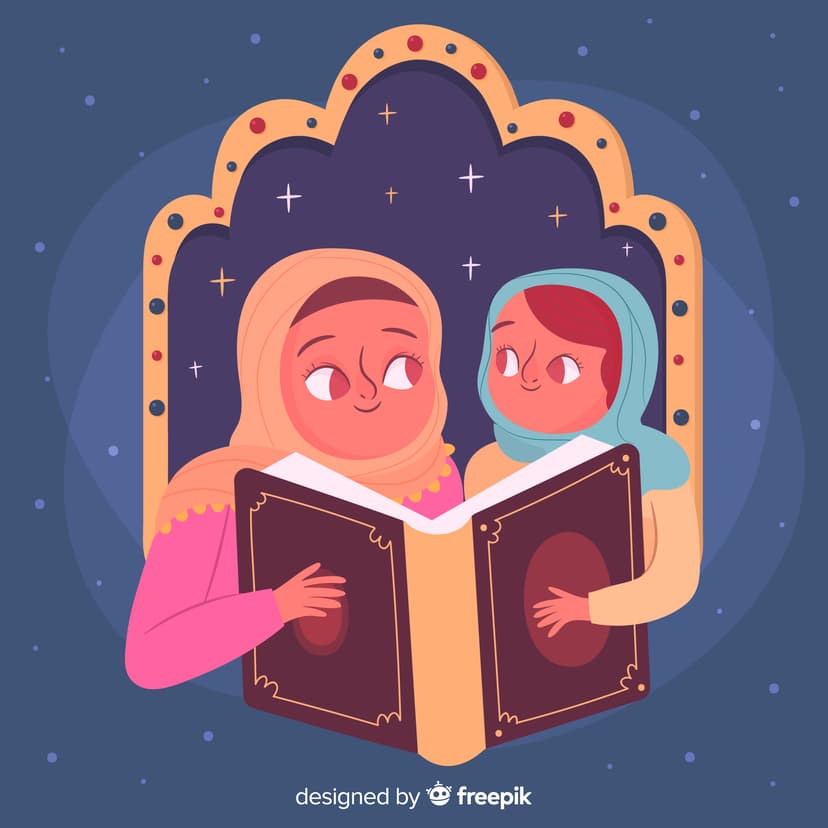
For girls learning Quran from childhood through adolescence, the representation effect of a qualified female teacher is significant and well-documented in educational research. A girl who sees a woman with deep Quranic knowledge, Tajweed mastery, and teaching authority learns through this relationship that Islamic scholarship is a domain she can inhabit — not one that belongs only to male scholars and which she participates in only peripherally.
This representational benefit operates at multiple levels:
- Competence modelling: The female teacher demonstrates that Quranic mastery — beautiful recitation, deep Tajweed correctness, knowledge of the tradition — is achievable for a woman. The girl student internalises this as a realistically available aspiration in a way she may not when the demonstrator is always male.
- Life-context relevance: A female teacher can address questions about Quran practice with specific women's life contexts in mind — reading Quran during pregnancy, maintaining practice around maternal roles, the specific experiences of adolescent Muslim girls navigating identity and faith. These are questions that female students may hesitate to raise with male teachers and that male teachers may be less equipped to address from personal and professional experience.
- Prophetic precedent: The Quranic tradition itself honours female scholarship at its highest levels — a girl who learns this history through her relationship with a female teacher receives a more complete picture of the Islamic tradition than one who learns only from male representatives of that tradition.
Benefit 3: Flexible scheduling designed around women's lives
Female Quran teachers who work with women online frequently understand the scheduling realities that organise women's days: school runs, nursing schedules, children's nap times, prayer times that interrupt predictable windows, work-from-home days with domestic demands layered over professional ones. This shared experiential context often produces scheduling flexibility — willingness to shift session times for nursing emergencies, patience with interrupted sessions, understanding of why a learner's focus quality peaks at specific times of day — that may be less automatically available from teachers without this shared context.
This is not a categorical statement about male teachers' inflexibility — it is an observation about the natural empathy that shared experience enables. A female teacher who has herself managed toddlers and prayer times and Quran learning simultaneously has knowledge the male teacher may lack about what sustainable practice for a mother actually looks like.
Benefit 4: Specialist female contexts — women-only groups and circles
Women-only Quran circles and group classes have a distinctive learning culture — they typically feature more open discussion of spiritual struggles, more willingness to admit knowledge gaps, and a more emotionally engaged relationship with the Quran's meaning. These circles require a female teacher to be fully appropriate for all members, and the best female teachers of women's groups understand and cultivate these distinctive features rather than simply delivering instruction in the same format used for mixed or male groups.
Online women-only Quran groups now reach Muslim women in geographically dispersed communities who would previously have had no access to this learning format — remote converts, women in non-Muslim majority areas, women whose local community doesn't have a functioning women's Quran circle. The online medium combined with qualified female teaching has significantly expanded access to this format.
How to request a female teacher — what to ask
When enrolling with any Quran learning platform or academy:
- "Can I specifically request to be assigned a female teacher?"
- "What are the qualifications of the female teachers available at my level?"
- "If my assigned female teacher is unavailable, what is the replacement policy — will I be offered only female alternatives?"
- "Is there a premium cost for requesting a female teacher, or is this simply a standard assignment preference?"
Any reputable academy handles female teacher requests as a standard, straightforward preference — not an unusual premium request. If a platform treats it as unusual, problematic, or cost-prohibitive, this signals that female teachers are not represented in the faculty in proportions appropriate to the likely gender mix of their student body.
Privacy and camera-related options
Even with female teacher assignment, further privacy options may be relevant:
- Audio-only sessions: Some sisters prefer no camera even with a female teacher — this is completely reasonable and any good teacher can work effectively with audio only (though camera adds Tajweed visibility value).
- Session recording preferences: Clarify whether session recordings are retained and who can access them. For sisters who are camera-on during sessions, understanding the recording access policy is a reasonable privacy consideration.
- Group session gender composition: For any group class, confirm the gender composition of other students — "women-only" group designation should be explicitly confirmed before enrolling, not assumed from "female teacher" designation.
FAQs about female Quran teachers
Do female Quran teachers hold the same credentials as male teachers?
Yes — Ijazah issuance, Tajweed training, and scholarly transmission are gender-neutral in the Quranic tradition. A female teacher with an Ijazah holds exactly the same scholarly credential as a male teacher with an Ijazah from the same riwaya. The chain of transmission does not distinguish by the gender of the transmitter.
Is it required for Muslim women to learn from female teachers?
No — there is no scholarly consensus requiring that Muslim women learn Quran only from female teachers. It is a preference with significant practical benefits as described above. Many Muslim women in countries with fewer female scholarly resources have learned from male teachers without any compromise of the learning or the tradition.
Request a female Quran teacher for your free trial: book a free trial lesson and specify your teacher preference — you will be matched with a qualified female teacher at your level with experience teaching sisters in your context.