Learning the Arabic alphabet as an adult in 2025 is often approached with a mix of high spiritual motivation and a concern about the cognitive challenge of mastering a new script with entirely different phonological rules. The reality, however, is that the Arabic alphabet is highly systematic, consisting of only 29 letters that follow logical grouping patterns based on visual shape and articulation points. For an adult learner, the key to success is not rote memorization, but understanding these underlying structures through a structured, 30-day roadmap that balances letter recognition with immediate application to Quranic text.
This guide provides a comprehensive 30-day plan for adult beginners to move from zero knowledge to confident letter recognition, basic joining, and the ability to decode simple Quranic words with their associated vowels.
The 29 letters: A logical framework for adults
Unlike many languages where letters are taught in a strictly linear alphabetical order, the most effective way for an adult to learn Arabic is by shape-groups. Because Arabic script is "nested"—meaning many letters share a base shape and are distinguished only by the number and position of dots—learning them in groups significantly reduces the visual load on the learner.
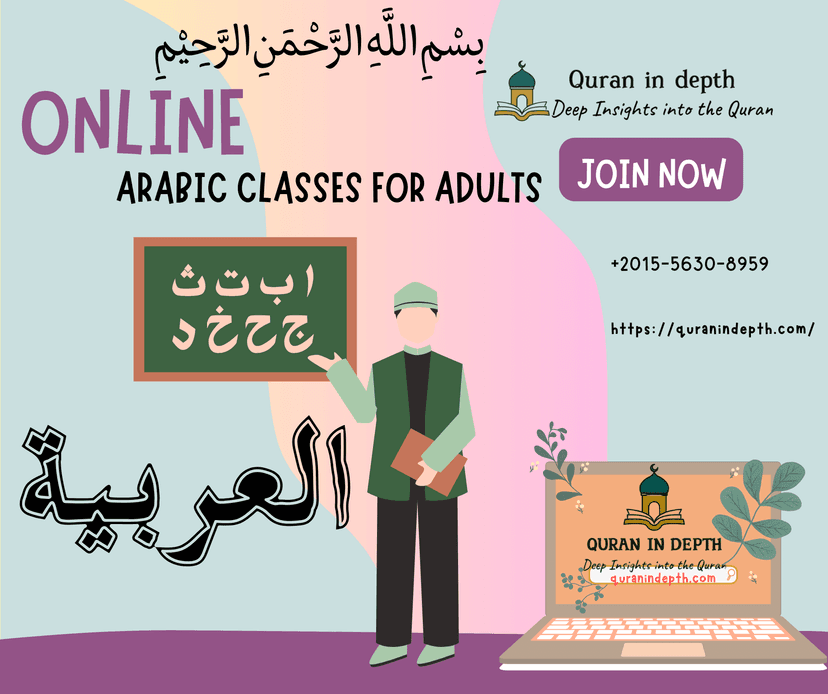
Group 1: The 'Bucket' letters (ب، ت، ث)
These three letters share a wide, bucket-like base. The only difference is the dots: one below (Ba), two above (Ta), and three above (Tha). For an adult, this is a pattern-recognition exercise. If you see the bucket shape, you know the base sound; you only check the dots to determine the specific consonant.
Group 2: The 'Hook' letters (ج، ح، خ)
These share a graceful, curved hook shape. Again, the dots provide the distinction: one inside (Jeem), no dots (Ha - breathe out hard), and one above (Kha - the guttural sound). Mastering these requires both visual discrimination and an understanding of the throat-based articulation points that characterize Arabic phonology.
Group 3: The 'Tail' letters (ر، ز) and 'Tent' letters (د، ذ)
These come in pairs. One is plain, one has a dot above. Recognizing these pairs allows you to build "phonological anchors"—once you know the sound of the plain letter, the dotted version is typically its voiced or emphatic counterpart.
The 4 crucial 'Phonetic Differences' for English speakers
Adult English speakers often struggle with four specific Arabic sounds that have no direct English equivalent. Addressing these early in your 30-day journey prevents "fossilized errors" where you permanently substitute a similar English sound for the correct Arabic one.
- The 'Ha' (ح) vs 'Ha' (ه): Arabic distinguishs between a deep throat 'h' (Haa) and a chest-based 'h' (ha). Adults often hear them as the same; the 30-day roadmap includes specific "mirror-drills" to feel the difference in your throat.
- The 'Ayn' (ع): This is arguably the most famous Arabic sound—a voiced pharyngeal constriction. It is produced by tensing the muscles in the middle of the throat. For beginners, it sounds like a "strained ah."
- The Emphatic letters (ص، ض، ط، ظ): These are "darker" versions of s, d, t, and dh. They require the tongue to elevate toward the palate, creating a deeper, more resonant sound.
- The Qaf (ق) vs Kaf (ك): The Qaf is a deep back-of-the-throat stop, while Kaf is the standard 'k' sound. Distinguishing these is vital for Quranic accuracy, as mixing them up can change the meaning of words.
The 30-Day Roadmap for 2025
This roadmap is designed for busy adults, requiring only 20 minutes a day. Consistency is more important than duration; 20 minutes every day for a month is vastly superior to one 5-hour session once a week.
Phase 1: Letter Mastery (Days 1-10)
Focus: Learning the 29 letters in isolation, their names, and their primary sounds. Use flashcards (physical or digital) and focus on one shape-group every two days. By Day 10, you should be able to identify any letter in isolation in under one second.
Phase 2: Joining and Positional Forms (Days 11-20)
Focus: Arabic is a cursive script; letters change their appearance depending on whether they are at the beginning, middle, or end of a word. This "Joining Stage" is often where beginners get overwhelmed. The roadmap simplifies this by showing that for 90% of letters, the character simply "gives up its tail" to reach for the next letter. You focus on the 'head' of the character.
Phase 3: The Vowels (Harakat) (Days 21-25)
Focus: Learning Fatha (a), Kasra (i), and Damma (u). Arabic script is essentially an abjad—the consonants are written, and the vowels are marks above or below the letters. Adults find this systematic once they realize the marks represent the same sounds every time. You will practice reading "ba-bi-bu," "ta-ti-tu," etc.
Phase 4: Quranic Word Decoding (Days 26-30)
Focus: Taking the joined letters and adding the vowels to read whole words. We use high-frequency Quranic words like "Allah," "Rasul," and "Iman" so that you gain immediate reward from your study. By Day 30, you will be able to read the opening verses of Surah Al-Fatiha slowly but accurately.
Overcoming the Spiritual Hurdles of Learning
For an adult, learning the Arabic alphabet is not just an academic task; it is a spiritual journey that often faces internal resistance.
- The 'Pride' Hurdle: It can be humbling for a successful professional or a parent to feel like a "beginner" again, struggling with basic letters. Remember that the Prophet (pbuh) said the one who struggles with the Quran gets a double reward. Humility is the first step toward true knowledge.
- The 'Never-Ending' Feeling: Sometimes it feels like the 29 letters are an infinite wall. This is a trick of the Shaitan to make you give up. Break the wall into the 30-day roadmap provided above, and celebrate every single letter you master.
- Renewing Your Niyyah: Every time you sit down to practice, remind yourself *why* you are doing this. You aren't learning a language; you are learning to read the final message from your Creator. This intention transforms a "study session" into an "act of worship."
Sensory Learning Techniques for Adults
Adults often rely too heavily on visual reading. To accelerate your learning, you must integrate all your senses.
- Tactile Writing (Sand or Air): Practice drawing the letters in the air or on a textured surface. This "Kinesthetic Memory" connects the letter shape directly to your motor cortex, bypassing the slow visual-indexing phase.
- Auditory Shadowing: Listen to a master reciter (like Sheikh Husary) and try to "shape" your mouth exactly like theirs as they say the letters. Even if you don't make a sound, the movement of your mouth builds the "Phonetic Map" in your brain.
- Visual Mapping: Use different colored pens for the "dots" and the "base shapes." This forces your eye to distinguish between the structural part of the letter and the discriminating mark (the dot).
The 20-minute daily routine
For an adult learner, a disciplined structure prevents the feeling of being overwhelmed. Use this breakdown for your daily practice:
- 5 Minutes: Letter Form and Sound Review. Quickly go through your shape-groups or current target letters. Say the name and make the sound aloud.
- 5 Minutes: Joining Patterns. Practice writing or identifying letters in their initial, medial, and final forms. Use a dry-erase board or dedicated notebook.
- 10 Minutes: Guided Quran Reading. Open a dedicated beginners' Quran (like the Noorani Qaida) and decode 5-10 words. Don't worry about speed; focus entirely on accuracy.
Choosing the right tools for 2025
While an app can provide repetition, an adult beginner needs structured resources that explain the "why" behind the script.
- Noorani Qaida: The gold standard for beginners. It is a systematic progression used for centuries, now available in beautiful PDF and interactive app versions.
- Arabic-English Alphabet Charts: Keep a visual guide at your desk. Seeing the letters constantly helps with passive recognition.
- Personalized Feedback: As an adult, your brain may try to "map" Arabic sounds to English ones incorrectly. Having a teacher listen to your recitation once or twice a week during this 30-day period is critical to ensuring your makharij (articulation) is correct from the start.
FAQ: Common concerns for adult beginners
Can I learn Arabic if I don't speak the language?
Yes. Reading the Quran is a specific skill (decoding the script and applying rules) that is independent of full linguistic fluency. Many non-Arabic speakers recite the Quran beautifully and with perfect Tajweed.
Is 30 days really enough?
For the alphabet and basic reading? Yes. For full Tajweed mastery? No. Think of this 30-day roadmap as getting your "learner's permit." It gives you the foundation so you can start reading daily, which is when the real progress begins.
What if I find certain letters impossible to pronounce?
This is common. The throat muscles required for letters like 'Ayn' or 'Haa' need training, just like any other muscle. If you can't get it perfectly today, focus on the visual recognition and keep practicing the sound—eventually, the muscle memory will click.
Ready to start your journey? Our Arabic Reading Course is built specifically for adults, using this 30-day methodology with live teacher support. Book your first lesson for free and get a personalized evaluation of your starting point.