Starting to read Quran as an adult — perhaps for the first time, perhaps returning after years away — is an experience unlike learning a new subject at school. The starting point is not from zero knowledge but from decades of existing self-concept: you already have a relationship with the Quran (as a believer who hears it, who knows it matters, who has perhaps felt its absence in your active practice), and now you are choosing to build the skill of reading it yourself. This existing relationship means the beginning is emotionally significant in a way that adult achievement of other learning goals rarely is.
This guide maps the complete journey from zero reading ability to confident adult Quranic recitation — with realistic timelines, specific milestones, and the particular encouragements and cautions that adult Arabic learners need to hear that are different from what younger learners need.
Defining the destination: what does "confident" mean?
Before the journey begins, defining the destination is worth the time. "Confident Quran reading" means different things to different adults:
- Prayer confidence: Being able to recite Al-Fatiha and three or four additional surahs in prayer from memory, correctly, without hesitation — and knowing with certainty that the recitation is correct rather than hoping it might be.
- Mushaf-reading confidence: Being able to open the Mushaf to any page and read at a reasonable pace with correct short vowels and applicable Tajweed rules — not perfect, but fluent enough to follow normal tilawah pace.
- Tarawih comprehension: Following the imam's recitation in tarawih with enough familiarity that some words and phrases are recognised, even if not full comprehension of everything recited.
These are three different levels of confidence, each requiring different duration to achieve. Clarifying which you are working toward in the first year allows you to set appropriate milestones and avoid measuring yourself against a standard you have not yet set as your goal.
Stage 1: Letters and sounds — the essential foundation (Weeks 1–4)
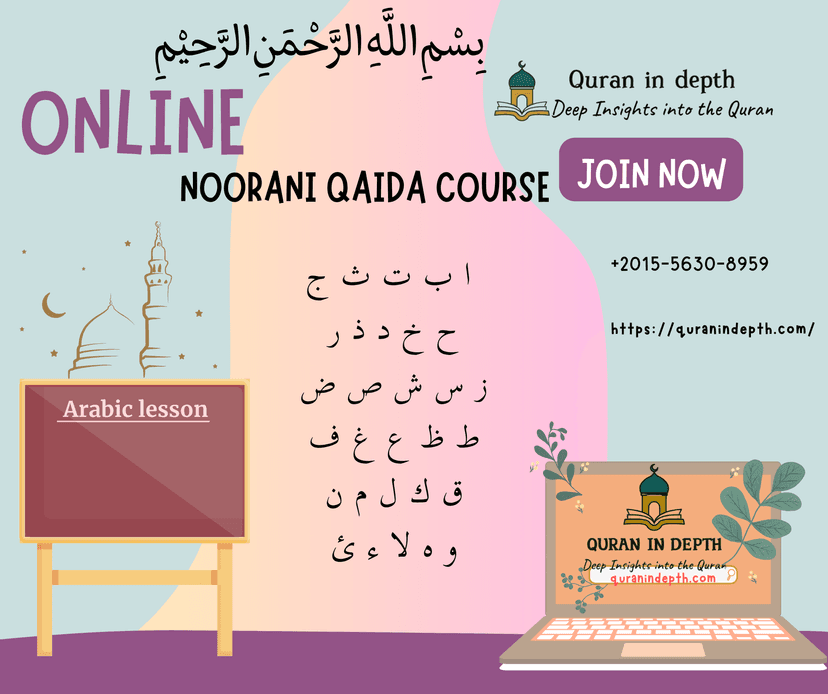
Every adult reading journey begins in the same place: the 29 letters of the Arabic alphabet, their sounds, and their isolated visual forms. There is no shortcut past this stage — and adults who have partially learned letters before and start "from where they left off" typically benefit from starting over, because partial letter knowledge with gaps produces reading with unpredictable holes rather than a solid alphabetic foundation.
What Stage 1 involves
- The 29 Arabic letters in isolation — their written form, their name, and their sound. By the end of Stage 1, you should be able to look at any isolated Arabic letter and produce its correct sound immediately, with zero hesitation on any of the 29.
- The basic distinction between letters that look similar — ب / ت / ث (distinguished by dots); ج / ح / خ (distinguished by dots and sound difference); ر / ز (the stroke with and without a dot); and others. These visual discrimination skills are the basis of all future reading accuracy.
- Basic harakat introduction: fatha (a), kasra (i), damma (u) applied to known letters. At Stage 1, this means being able to read simple consonant-vowel combinations (ba, bi, bu; ta, ti, tu) — not yet real words, but the basic building block of all Quranic syllables.
Stage 1 daily practice
20 minutes per day is sufficient for Stage 1 progress. Use the Noorani Qaida (freely available as a PDF with companion audio) — specifically Lessons 1–3 for the isolated letters and Lesson 4 for the basic harakat introduction. The Noorani Qaida audio provides a verified model of how each letter sounds; the PDF provides the visual reference. Use both together rather than either alone.
Stage 1 milestone: recite all 29 Arabic letters in sequence, in isolation, correctly, from the PDF without the audio cue. Then pick five letters at random and produce them without looking at the PDF. When you can do this confidently, Stage 1 is complete.
Stage 2: Joining and connected forms — the reading unlock (Weeks 4–10)
This is the most intellectually demanding stage for most adult learners and the one where the most people stall. The reason: in Stage 1, letters looked familiar — they were distinct, isolated, and clearly recognisable. In Stage 2, Arabic letters connect to each other and change their visual form significantly depending on their position (beginning, middle, or end of a word). A letter you learned clearly in isolation may look almost entirely different when connected.
What Stage 2 involves
Working through Lessons 5–8 of the Noorani Qaida, which systematically teach each letter in its three connected positions. The most commonly confused letter groups in Stage 2:
- ف (fa) — in isolation shows a clear single tooth shape; in connection the dot moves and the letter becomes part of a flowing stroke that beginners frequently confuse with ق or even ع.
- ع (ayn) — has four very different visual forms across its positions; this letter takes most adult learners the longest to fully stabilise in all connected positions.
- ن (noon) — in its initial and medial connected forms loses the distinctive dot-above-a-bowl look of its isolated form and becomes a tooth shape identical to several other letters' connected forms, distinguished only by position of the dot.
Stage 2 daily practice
30 minutes per day for Stage 2 — the increased time from Stage 1 reflects the higher cognitive demand. Increase to two complete passes of each Noorani Qaida lesson page: first with audio (following along), then independently (without audio).
Stage 2 milestone: read 10 consecutive three-letter Arabic words from the Noorani Qaida at a pace of 1 word every 3 seconds, with all harakat correctly produced, without any letter identification errors. This is a meaningful reading fluency threshold — it indicates that connected letter recognition is functional.
Stage 3: Short surahs with correct recitation — the application phase (Weeks 10–26)
Having completed the Noorani Qaida's letter and joining foundations, the learner transitions to actual Quranic text. Stage 3 begins at Juz Amma — the 30th chapter of the Quran, consisting of short surahs, and the most commonly memorised and recited portion in prayer. The short surahs of Juz Amma provide immediate practical value for prayer alongside the reading skill development they support.
Stage 3 structure
Work through Juz Amma surahs from the shortest to the longest, introducing each new surah only after the previous one can be read or recited with teacher-verified Tajweed accuracy:
- Surah Al-Kawthar (3 verses) — first Juz Amma surah to read, verify, and memorise.
- Surah Al-Ikhlas (4 verses) — theological density in minimal text; perfect for close meaning study alongside reading practice.
- Surah Al-Falaq (5 verses) — introduces Ma'uth vocabulary; first surah with aqeedah-level meaning engagement appropriate for adult learners.
- Surah An-Nas (6 verses) — completes the two-surah protection pair; begins to reveal the Quranic meaning patterns that adult learners find intellectually engaging.
- Continue through Juz Amma at the pace of 1–2 surahs per week, depending on length and complexity.
Tajweed introduction at Stage 3
Stage 3 is the point at which basic Tajweed rules should be introduced — specifically the four rules of Noon Sakinah (Izhar, Idgham, Iqlab, Ikhfaa) and the Madd Tabee'i (the 2-count long vowel elongation). These two rule categories cover the Tajweed elements that appear most frequently in the short surahs of Juz Amma and make a significant qualitative difference to the recitation sound.
Realistic timelines for adult learners
| Stage | Duration | Daily practice | Milestone |
|---|---|---|---|
| Stage 1: Letters and sounds | 3–5 weeks | 20 min/day | All 29 letters instantly recognisable |
| Stage 2: Connected forms | 5–8 weeks | 30 min/day | Connected short words readable at 1 word/3 sec |
| Stage 3 (early): 5 surahs read and verified | Months 3–4 | 25 min/day | Al-Fatiha + 4 short surahs recited correctly |
| Stage 3 (mid): Juz Amma half complete | Month 5–7 | 25 min/day | 15+ short surahs read fluently |
| Stage 3 (established): Mushaf reading confidence | Month 8–12 | 25–30 min/day | Any passage readable at moderate pace, teacher-verified |
These timelines assume consistent daily practice at the specified daily duration and at least monthly teacher verification sessions. Irregular practice (less than 4 days per week) extends each stage by approximately 50%. More frequent teacher sessions (weekly) typically accelerate Stage 2 and Stage 3 by 20–30% by catching and correcting errors before they become entrenched.
The specific encouragements adult learners need
- The hadith applies to you specifically: "The one who recites the Quran and struggles with it will have two rewards" (Bukhari and Muslim). You as an adult learner — who struggles with these sounds, who finds the connected forms confusing, who makes errors you cannot even hear yourself making — are specifically described in this hadith. The struggle is the point at which the extra reward applies.
- You have advantages children do not: Adults bring motivation (you chose this, nobody made you), context (you understand why this matters), metacognition (you can reflect on your own learning), and the ability to engage with meaning from the first day in a way children cannot. These genuine advantages produce a different but equally valid learning experience.
- Your starting point is not behind — it is where you are: Every adult's starting point is the right place to begin. There is no embarrassment in starting from zero as an adult; there is only the choice to begin.
FAQs about adults starting Quran reading
Is it too late to start reading Quran as an adult?
No — this question has no meaningful positive answer in the Islamic tradition. Sheikh Abd al-Rahman al-Sudan, one of the 20th century's most renowned Quran scholars, began his formal Quran study at the age of 37. The tradition is full of people who began late. The question that matters is not "is it too late?" but "when do I begin?"
Begin with a teacher who has experience with adult Quran beginners: book a free trial lesson — mention that you are starting from zero or near-zero, and we will match you with a teacher experienced specifically with adult beginners, who will make the beginning genuinely encouraging.