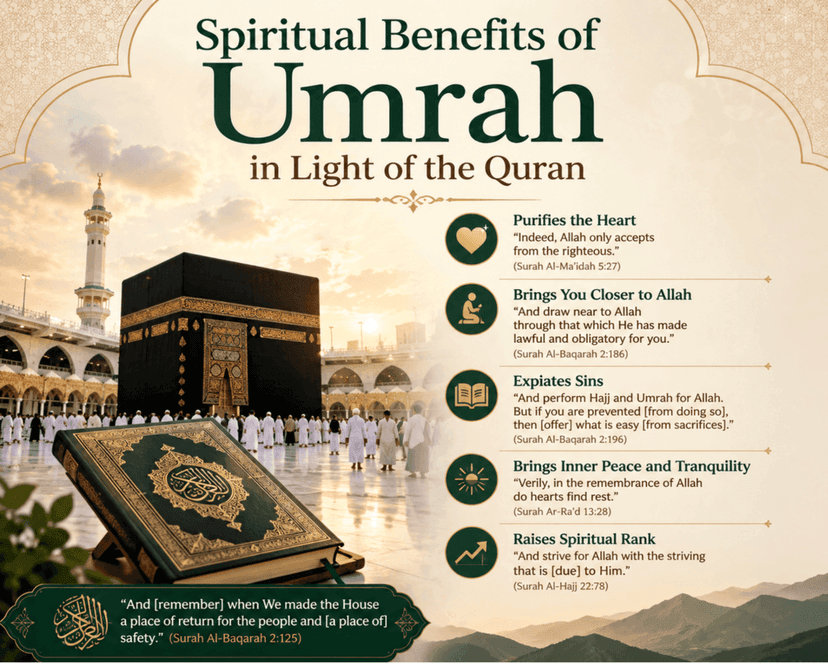

Travel is the most consistent disruptor of Quran practice for those who have otherwise established a reliable routine. A trip of 5–10 days — whether for work, family, or Hajj and Umrah — can break a habit that took months to build, and the re-entry after return is often harder than the original habit establishment. At the same time, travel is also one of the Quran's most naturally recommended contexts for reflection and remembrance — the temporary departure from routine that is a journey creates a clarity and openness that settled life rarely produces as clearly.
This guide gives you a practical travel Quran maintenance plan — one that is genuinely achievable through airports, hotel rooms, family visits, and fragmented schedules — so that what you have built does not disappear during every trip.
Why travel breaks Quran habits — and how to prevent it
Travel disrupts Quran practice through four specific mechanisms, each requiring a different prevention strategy:
- Schedule disruption: Travel eliminates the reliable daily cues that trigger practice at home (the specific time, the specific physical location, the sequence of events around the habit). Solution: replace location-based cues with portable, event-based cues that travel with you.
- Physical environment change: There is no dedicated Quran space, the Mushaf is not visible on the desk, the familiar setup is absent. Solution: bring minimal physical anchors that recreate a micro-environment for practice.
- Social pressure and obligation: Family visits involve social demands that compete directly with solo practice time. Solution: social context Quran integration rather than solo practice time extraction.
- Fatigue and time zone disruption: Extended travel itself causes fatigue that reduces discipline for all habits. Solution: shrink the daily commitment to its minimum viable form for the travel period rather than attempting to maintain full routine under reduced capacity.
Before you travel: the 20-minute pre-travel setup
Complete these actions before departure — not while packing, but 24–48 hours ahead:
Download your practice materials for offline access
- Download the surahs you are currently studying from Quran.com for offline audio access — airport and hotel WiFi may be unreliable, and offline downloads eliminate this barrier to practice.
- Download any tafseer or translation reference you use — again on Quran.com or Ayat, which both allow offline content access.
- If you use Quran Companion for Hifz tracking, ensure reviewed content is synced offline.
Decide your travel minimum — in advance
The travel minimum is the single daily practice action you commit to regardless of what else happens. Write it down explicitly before leaving home. Examples:
- "Every day of this trip, I will recite Al-Fatiha and the three quls from memory after Fajr — regardless of time zone, hotel, or schedule."
- "Every day, I will listen to 10 minutes of Husary — during the airport, on the plane, or before sleep."
- "Every day, I will read one verse of the Quran with its translation — one verse is the floor."
The travel minimum should be so small that it is literally impossible to justify skipping it on any day. Its purpose is keeping the habit alive — not maintaining your normal volume of practice.
Pack a pocket Mushaf
A small-format Mushaf — approximately A6 size — weighs almost nothing and takes minimal luggage space. Its physical presence in a carry-on bag is one of the most effective travel habit supports available. When the Mushaf is in your bag, the barrier to opening it during any wait (airport queue, hotel lobby, between meetings) is essentially zero. When it is at home, no amount of good intent compensates for the friction of accessing it.
On-the-go practice: travel windows you already have
Travel creates several windows that, at home, are filled with other activities. Identified and used deliberately, these are your travel practice opportunities:
Airport and transit time
A 30-minute departure gate wait is a practice opportunity. A 2-hour flight with nothing requiring attention is a significant practice window. Load earbuds, open offline Husary audio, follow along with the downloaded Mushaf. If you are memorising, use transit time for Hifz repetition of already-learned material — the goal is review rather than new memorisation in transit, since memorisation quality is best in calm, alert states rather than the elevated stimulation of airports.
Hotel room mornings
Hotel mornings — particularly when jet lag creates an early wake rather than the late sleep of leisure travel — are often the best practice windows of a trip. The room is quiet, there are no social obligations, and the mild disorientation of being away from home can produce a quality of attentive presence that familiar surroundings sometimes cannot. Use the hotel morning specifically for the day's minimum practice rather than for email or social media.
Evening, before sleep
Surah Al-Mulk before sleep is a consistent prophetic recommendation. It is 30 verses — approximately 5–7 minutes at a comfortable pace. This recitation is easily maintained across travel because it has no location dependency, no equipment dependency, and it is short enough to complete even with significant fatigue.
Integrating Quran during family visits
When travel involves staying with family — particularly extended family across generations — practice windows compete with obligation. The most effective strategy shifts from extracting solo practice time to integrating Quran into the shared family context:
- Recite for the household after Fajr: A brief recitation of a familiar surah for the household after the morning prayer — not a performance, but a contribution to the collective morning. Most family contexts welcome this; it is Quran engagement that fits rather than conflicts with the social environment.
- Ask an elder about the Quran: "Do you have a surah you particularly love, Ammu/Khalu/Nana?" opens a conversation about the Quran that is both a social interaction and a learning experience. What a grandparent knows about a surah — its context in their life, its personal significance — is a form of Quran engagement no app can replicate.
- Read with children present: If young children are in the household, opening the Mushaf or playing a verified recitation in their presence is an act that builds the children's Quran association while maintaining your own practice. Two purposes for one activity.
Re-entry after travel: the 3-day restoration
The most important travel-habit protocol is the return plan. Returning home after a disrupted trip typically involves: fatigue, accumulated obligations, and the psychological sense that the routine "reset" must wait until things feel normal again. This waiting stance is what turns a 7-day travel gap into a month-long break.
The three-day restoration protocol:
- Day 1 (day of return or next morning): Complete only the travel minimum. Do not attempt to immediately restore the full pre-travel routine. The minimum re-establishes the habit signal without requiring energy you may not have.
- Day 2: Return to 50% of normal practice volume. If your normal practice is 30 minutes, do 15 minutes with full attention.
- Day 3: Resume full normal practice. Three days is sufficient for physical and circadian re-adaptation to home environment for most short-to-medium trips. For journeys crossing significant time zones, allow an extra day per day of jet lag experienced.
FAQs about maintaining Quran practice while travelling
Is it permitted to recite Quran while driving?
Listening to Quran audio while driving is entirely permissible and a productive use of commute or driving time. Actively reading from a Mushaf while driving is not advisable for safety reasons. Audio-based review of memorised material — reciting from memory rather than reading from text — is safe and makes long drives into productive Hifz review sessions.
What if my travel is for Hajj or Umrah — how should I approach Quran practice differently?
Hajj and Umrah travel is the most Quran-conducive context available — the physical and spiritual environment actively supports recitation, du'a, and Quranic reflection in a way that routine daily life cannot. Rather than a travel maintenance plan, these journeys warrant a travel enrichment plan: specific surahs to recite at specific sacred sites (Al-Fatiha and Ayat Al-Kursi at the Ka'bah, Surah Al-Baqarah openings in Makkah lodging), a written reflection journal for what specific Quranic verses mean in this context, and as much Quran engagement as the physical demands of the journey permit.
Return from travel ready to re-engage: book a free trial lesson as your post-travel restart session — having a teacher check your recitation after a travel interruption is one of the most effective restoration tools available.